guides
How to Evaluate AI SEO and Content Ops Tools Before You Buy
A documentation-based procurement checklist for search discovery, brand content, CRM activation, and creative handoffs. No hands-on tests or verified price figures; evaluate dependencies and acceptance criteria before buying.
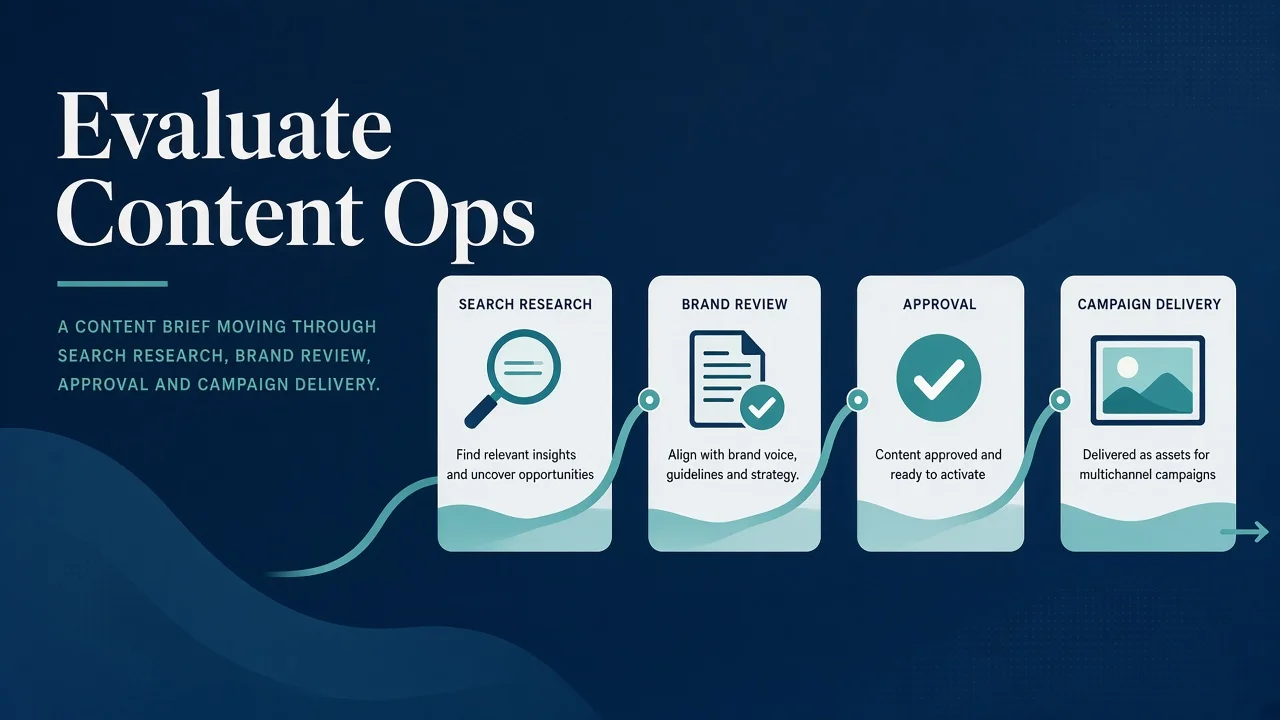
Buying an AI content tool starts with identifying where work stops. A team may struggle to discover search opportunities, turn research into a useful brief, preserve brand rules during editing, or move approved assets into campaigns. Each problem needs a different evaluation. Counting generated words leaves the difficult handoffs out of the decision.
This is a documentation-based buying guide. Hands-on tests were not run. Public documentation was reviewed on November 7, 2026, but account access, implementation behavior, prices, and contract entitlements are not verified. The proposed exercises below are evaluation tasks for a future authorized pilot.
Match the purchase to a workflow stage
For search discovery and diagnosis, put BrightEdge on the research shortlist. Its enterprise SEO materials describe search reporting, technical investigation, and content prioritization. Ask which reports would change your next publishing decision and which team would act on them. A documented reporting capability does not establish that your site will gain traffic. BrightEdge enterprise SEO documentation
For brand-controlled content production, examine Jasper. Its Brand Voice documentation describes building a voice from supplied examples and making that voice available within a workspace or privately. Evaluate whether an editor can maintain approved terminology and correct unsupported claims. Brand consistency and factual correctness require separate checks. Jasper Brand Voice documentation
When the bottleneck is CRM activation, investigate the specific marketing package behind HubSpot AI. HubSpot documents enrollment triggers and actions in workflows, with subscription requirements. Map a proposed content handoff to the actual workflow action and required subscription. AI assistance alone does not establish access to marketing automation or every destination channel. HubSpot automation documentation
For advertising and email creative operations, examine Adobe GenStudio for Performance Marketing. Adobe describes creating brand-aligned ads and emails, while its Journey Optimizer integration documentation specifies licensing, organization, and role dependencies. Scope the exact asset and destination before assuming a campaign handoff is included. Adobe integration documentation
These categories establish starting points for procurement. A tool may span several stages, but each additional stage needs its own evidence. Document the primary task first, then inspect adjacent features when they remove a specific handoff your team already performs.
Record the current workflow before a demo
Create a short baseline using an existing content process. Record the CMS, analytics system, CRM, asset library, approval owner, publishing channels, and data permissions. Identify who owns the final article and who can authorize campaign activation. Include agencies and contractors if their access affects review or delivery.
Describe the bottleneck in operational terms. For example, briefs may wait for source review, editors may repeatedly correct terminology, or campaign managers may manually rebuild approved copy. Record the work involved and the evidence available. Avoid assigning an invented time saving to a problem that has never been measured.
Separate necessary requirements from conveniences. A required CMS field mapping could determine whether implementation succeeds. A preferred drafting shortcut may have little effect on delivery. This distinction helps the buyer reject an attractive demo when the essential connection remains unproven.
Also record the baseline quality standard. Identify who checks factual claims, which topics need specialist review, and how corrections reach already published assets. Purchasing software without an owner for these decisions leaves the workflow incomplete.
Use one fictional brief across the evaluation
Prepare a fictional B2B software brief explicitly labeled as evaluation material. Define an audience, a search intent, a proposed page purpose, and five brand constraints. Supply three reference documents whose contents an editor can check. Keep real customer information out of the exercise.
Assign work according to the product's documented role. A search platform might help prioritize a topic or investigate competing pages. A writing platform might draft from the approved brief. A CRM workflow might route an approved asset. A creative platform might adapt approved messaging into a campaign format. Record unsupported steps as not verified.
The shared brief should contain a controlled conflict. One supplied document could include an outdated fictional price, while another contains the corrected fictional value. Label both as synthetic test inputs. Ask the evaluator to explain how the conflict should be resolved and preserve the source trail.
Judge the resulting workflow through editor-visible evidence. Can reviewers identify the source behind a claim? Can they change an approved phrase without losing the revision? Can the next owner see what still needs checking? These questions create a concrete acceptance standard without pretending the exercise has already happened.
Inspect the handoff as carefully as the draft
A successful draft still needs an owner, a revision state, and a delivery format. Ask for a demonstration of the exact handoff your team requires. Inspect headings, metadata fields, links, images, approval status, and attribution tags where relevant. Record whether each item transfers automatically or requires manual work.
Preserve a copy before and after the handoff. Compare substantive content and field mappings. A connector name in a marketplace does not establish that the connector handles your custom fields, permissions, or publishing rules. Those details remain pending until demonstrated in the intended environment.
Check procurement dependencies individually
Connectors and permissions
For each connection, identify the account owner, authentication method, permitted actions, and maintenance responsibility. Determine whether the integration reads data, writes drafts, or publishes content. Ask what happens when an administrator revokes access or a destination changes its schema.
Keep a record of dependencies that require another subscription or external service. Label each requirement as documented, demonstrated, contract-confirmed, or not verified. A public feature page can support a shortlist while leaving the entitlement question open.
Review and auditability
Ask how a draft becomes approved and who can bypass that state. Inspect whether reviewers can recover previous versions and identify the person responsible for a change. If an audit trail is essential, require evidence of the specific events retained and the export available to your organization.
Treat generated citations as claims requiring inspection. An editor should open the source and confirm that it supports the associated statement. Source availability, factual freshness, and permission to reuse material are separate review questions.
Billing and implementation
Request a scoped commercial proposal covering the package, seats, usage units, connectors, services, onboarding, and renewal conditions. Current price numbers and billing limits are not verified in this guide. Record the region, currency, billing cycle, and quotation date when your procurement team obtains them.
Include internal implementation work in the comparison. Someone must configure fields, prepare approved brand material, train reviewers, and maintain integrations. Estimate those tasks from your own staffing plan. Vendor marketing about efficiency cannot supply your organization's implementation budget.
Define acceptance and exit conditions
Write acceptance conditions before starting an authorized pilot. The workflow should preserve required claims, identify unresolved source conflicts, keep approval ownership visible, and deliver the required artifact. Any mandatory connection should work through the normal entry point used by the responsible team.
Keep editorial acceptance separate from commercial outcomes. A pilot may demonstrate a reliable publishing handoff without establishing organic growth. Search results depend on factors beyond draft generation, and an operational evaluation cannot justify a ranking guarantee.
Specify how to stop. Confirm what content, brand material, project records, and reports can be exported. Ask who revokes credentials and what the contract says about deletion and retention. Data portability and deletion behavior remain not verified until the relevant documentation or contract establishes them.
The purchase decision should name the bottleneck addressed, evidence collected, unresolved dependencies, and person responsible for rollout. If a mandatory requirement remains unverified, record that gap before committing budget. An incomplete evaluation is a reason to narrow the proposed purchase or continue verification.
FAQ
Can one subscription cover the entire content operation?
Possibly, depending on the package and workflow. Verify discovery, drafting, review, publishing, activation, and reporting separately. A broad platform description cannot establish every entitlement or integration your team needs.
Should a pilot compare how much text each tool produces?
Measure output volume only when it matters to your workflow. Include source checking, editorial revision, approval, and delivery effort. Those steps determine whether the generated material becomes usable content.
Does this guide establish which tool improves SEO most?
No SEO outcome was tested. This documentation-based framework supports procurement questions and pilot design. Traffic changes, rankings, implementation reliability, and return on investment remain not verified.